Last Updated:
June 29, 2026
If you've walked through the lawn care aisle of a home improvement store, you've probably seen dozens of fertilizer products promising greener, thicker grass. It's easy to assume that spreading fertilizer is a simple weekend project, but growing a healthy lawn takes more than choosing a bag with a nice label.
While it's certainly possible to fertilize your own lawn, professional lawn fertilization produces more consistent results while greatly reducing the chances of costly mistakes. Keep reading to learn more, and be sure to check out our lawn fertilization services in the Kansas City area!
Many homeowners think fertilizer should be applied whenever the lawn looks dull, and it will quickly turn green. In reality, fertilization is much more strategic. Different nutrients serve different purposes, and grass requires varying amounts of those nutrients depending on the season.
For example, nitrogen encourages leaf growth, phosphorus supports root development, and potassium improves overall stress tolerance. Applying too much of one nutrient or not enough of another can throw the lawn out of balance. Professionals understand these nutrient relationships and adjust applications throughout the year to support healthy growth instead of temporary bursts of color.
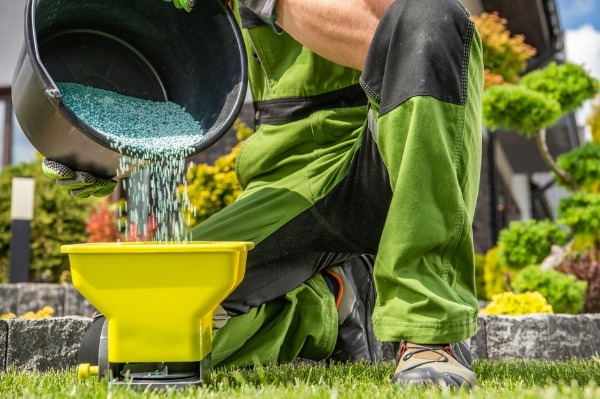
Applying fertilizer evenly across an entire lawn is harder than many homeowners expect. Even with a quality spreader, it's easy to apply too much in some areas while missing others entirely. Uneven applications often lead to streaks of dark green grass, pale patches, or inconsistent growth that becomes noticeable within a few weeks.
Homeowners also have to determine which fertilizer formulation is appropriate, how much product to use, when to water, and whether weather conditions are suitable for an application. Without experience, these decisions often become educated guesses.
DIY lawn fertilization commonly requires homeowners to:
Even minor application errors can affect the health and appearance of your lawn. Overfertilizing often creates rapid top growth that requires more mowing while placing unnecessary stress on the root system. Underfertilizing, on the other hand, may leave grass thin, weak, and more vulnerable to weeds.
Applying fertilizer immediately before a heavy rainstorm can wash nutrients away before they're absorbed, while fertilizing during periods of extreme heat may increase the risk of damaging already stressed turf. These mistakes can reduce the effectiveness of the application and, in some cases, require months for the lawn to fully recover.
Some of the most common DIY fertilization problems include:
Professional lawn care companies build fertilization programs around the specific needs of your lawn rather than relying on generic schedules. Experienced technicians evaluate growing conditions, seasonal changes, and local climate to determine when and how much fertilizer should be applied.
Commercial-grade application equipment also provides more uniform coverage than many consumer spreaders. Combined with high-quality fertilizer products and trained application techniques, this creates healthier turf with fewer problems throughout the growing season.
Professional lawn fertilization provides advantages such as:
One of the biggest advantages of hiring a professional is that fertilization is usually only one part of a comprehensive lawn care program. During routine visits, technicians monitor your lawn for developing issues that many homeowners don't notice until significant damage has already occurred.
Early signs of insect activity, fungal diseases, nutrient deficiencies, compacted soil, or weed infestations can often be identified before they spread across the yard. Addressing these issues proactively helps maintain a healthier lawn while preventing more expensive repairs later.
Rather than simply applying fertilizer, professionals continuously evaluate the overall condition of your turf and adjust treatments as conditions change throughout the season.
DIY fertilization can appear less expensive upfront, but repeated applications, purchasing multiple fertilizer products, replacing damaged grass, and correcting application mistakes can quickly add up. Many homeowners also spend money on products they don't actually need because they aren't sure which fertilizer is appropriate for their lawn.
Professional fertilization programs eliminate much of this uncertainty. Instead of experimenting with different products and schedules, you receive a proven plan designed to maximize lawn health while minimizing wasted time, materials, and effort.
For homeowners who value consistent results and want to avoid unnecessary risks, professional fertilization is often the more cost-effective investment over the life of the lawn.
Q: Is it possible to fertilize my own lawn?
A: Yes, but successful fertilization requires choosing the right products, applying them evenly, and timing applications correctly throughout the year.
Q: Why do professionals get better results?
A: Lawn care professionals use commercial-grade equipment, premium fertilizer products, and customized treatment schedules based on your lawn's specific needs.
Q: Can too much fertilizer damage grass?
A: Absolutely. Excess fertilizer can burn grass blades, weaken root systems, and create unhealthy growth that leaves the lawn more susceptible to stress.
Q: How many fertilizer applications does a lawn usually need each year?
A: Most lawns benefit from several treatments throughout the growing season, although the exact schedule depends on the grass type, climate, and overall lawn health.
Q: Does fertilization help prevent weeds?
A: Yes. Thick, healthy turf created through proper fertilization naturally crowds out many weeds by limiting the space and sunlight they need to establish.
Q: Is professional lawn fertilization worth hiring for a small yard?
A: In many cases, yes. Even smaller lawns benefit from accurate applications, expert timing, and ongoing monitoring, making professional care a worthwhile investment for maintaining healthy, attractive grass.

Touch up your lawn with Heartland Turf & Landscape