Last Updated:
September 30, 2026
Fertilizer is meant to improve lawn color, growth, and overall turf health, so seeing yellow grass after an application can be frustrating. In some cases, the discoloration is temporary and harmless. In others, yellowing can indicate that the lawn received too much fertilizer or was already under stress.
Keep reading to understand the possible causes of yellowing grass after lawn fertilization treatments and how to avoid additional damage.
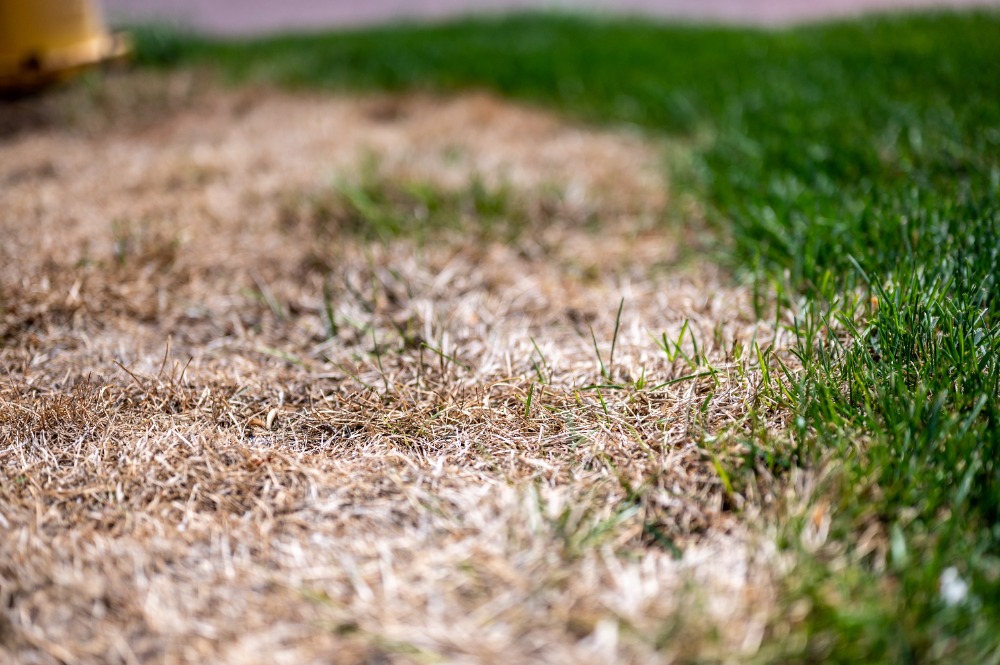
One of the most common causes of yellow or brown grass after fertilization is applying too much product. Excess nutrients and fertilizer salts can draw moisture away from grass plants and damage the roots or blades.
Overlapping applications can also create concentrated areas of fertilizer that appear as yellow or brown patches. To reduce the risk:
Grass needs adequate moisture to use nutrients effectively. If the soil is dry when fertilizer is applied, concentrated nutrients can remain around the grass roots and increase the risk of fertilizer burn.
This is especially important during hot, dry weather. A lawn that is already experiencing drought stress may respond poorly to fertilization.
Watering appropriately after fertilization can help move nutrients into the soil and reduce the concentration around individual grass plants. Always follow the product's watering instructions, since application requirements vary.
Fertilizer does not always cause yellowing. Sometimes the application simply happens around the same time another lawn problem begins.
Heat, drought, compacted soil, heavy traffic, insects, and disease can all cause turf to lose its healthy green color. Adding fertilizer won't necessarily correct these underlying issues and, in some situations, can add additional stress. Look for other symptoms such as:
If only certain areas of the lawn have turned yellow, the application itself may be part of the problem. Fertilizer can be distributed unevenly when a spreader is improperly calibrated, used at the wrong setting, or passed over the same area multiple times.
This can create distinct streaks, stripes, or patches where the grass received more fertilizer than surrounding turf. Calibrating application equipment and maintaining consistent walking patterns can help produce more uniform coverage.
Temperature and rainfall can influence how fertilizer behaves after it is applied. Applying fertilizer during periods of extreme heat or drought can put additional stress on turf.
Heavy rainfall presents a different problem. Excessive water can move nutrients away from their intended location, while saturated soil can interfere with normal root function. For the healthiest response, fertilizer applications should be timed around the needs of the specific grass type and current growing conditions.
Not every yellow lawn needs more fertilizer. Adding additional nutrients when the real problem is insects, disease, poor drainage, soil compaction, or another issue can make diagnosis more difficult.
If yellowing continues despite proper fertilization and watering, inspect the lawn for other potential causes. A soil test can also help determine whether nutrient levels or soil conditions are contributing to poor turf color.
Avoid immediately applying more fertilizer. First, determine whether the lawn is dry, whether the product was applied correctly, and whether the yellowing is concentrated in specific areas.
Depending on the cause, the lawn may recover with proper moisture and time. More serious fertilizer damage or an unrelated lawn problem may require professional evaluation. A good approach is to:
Healthy turf depends on more than fertilizer alone. Proper mowing, watering, soil conditions, sunlight, and pest management all influence how well grass uses available nutrients.
When fertilizer is applied at the correct rate and at an appropriate time, it can support stronger, greener turf without unnecessary stress. If yellowing continues, identifying the underlying problem is more important than simply adding more nutrients.
Q: Is it normal for grass to turn yellow after fertilization?
A: Slight discoloration can occasionally occur, but significant yellow or brown areas may indicate fertilizer burn, uneven application, drought stress, or another lawn problem.
Q: Can too much fertilizer kill grass?
A: Yes. Excess fertilizer can damage grass blades and roots, particularly when applications are too concentrated or the lawn is already experiencing heat or drought stress.
Q: Should I water yellow grass after fertilizing?
A: If the fertilizer product calls for watering after application, follow those instructions. Adequate moisture can help nutrients move into the soil, but avoid excessive watering that leaves the soil saturated.
Q: Why are only certain areas of my lawn turning yellow?
A: Patchy yellowing may result from uneven fertilizer distribution, overlapping applications, localized drought, soil problems, pests, or disease.
Q: Should I fertilize again if my grass is still yellow?
A: Not necessarily. Applying additional fertilizer without identifying the cause can worsen the problem. Determine why the grass is yellow before making another application.
Q: How can I prevent fertilizer from burning my lawn?
A: Use the correct application rate, calibrate your spreader, avoid overlapping passes, follow product instructions, and avoid fertilizing turf that is already severely stressed by heat or drought.

Touch up your lawn with Heartland Turf & Landscape