Last Updated:
May 22, 2026
A healthy lawn naturally develops a layer of organic debris between the soil and the grass blades, but when a thatch layer becomes too dense, it can interfere with essential lawn care practices.
When thatch grows excessively dense, it can block aeration equipment from reaching the soil effectively. Addressing the buildup beforehand allows aeration to loosen soil and promote stronger root development. Without that step, the results of aeration may be limited or short-lived.
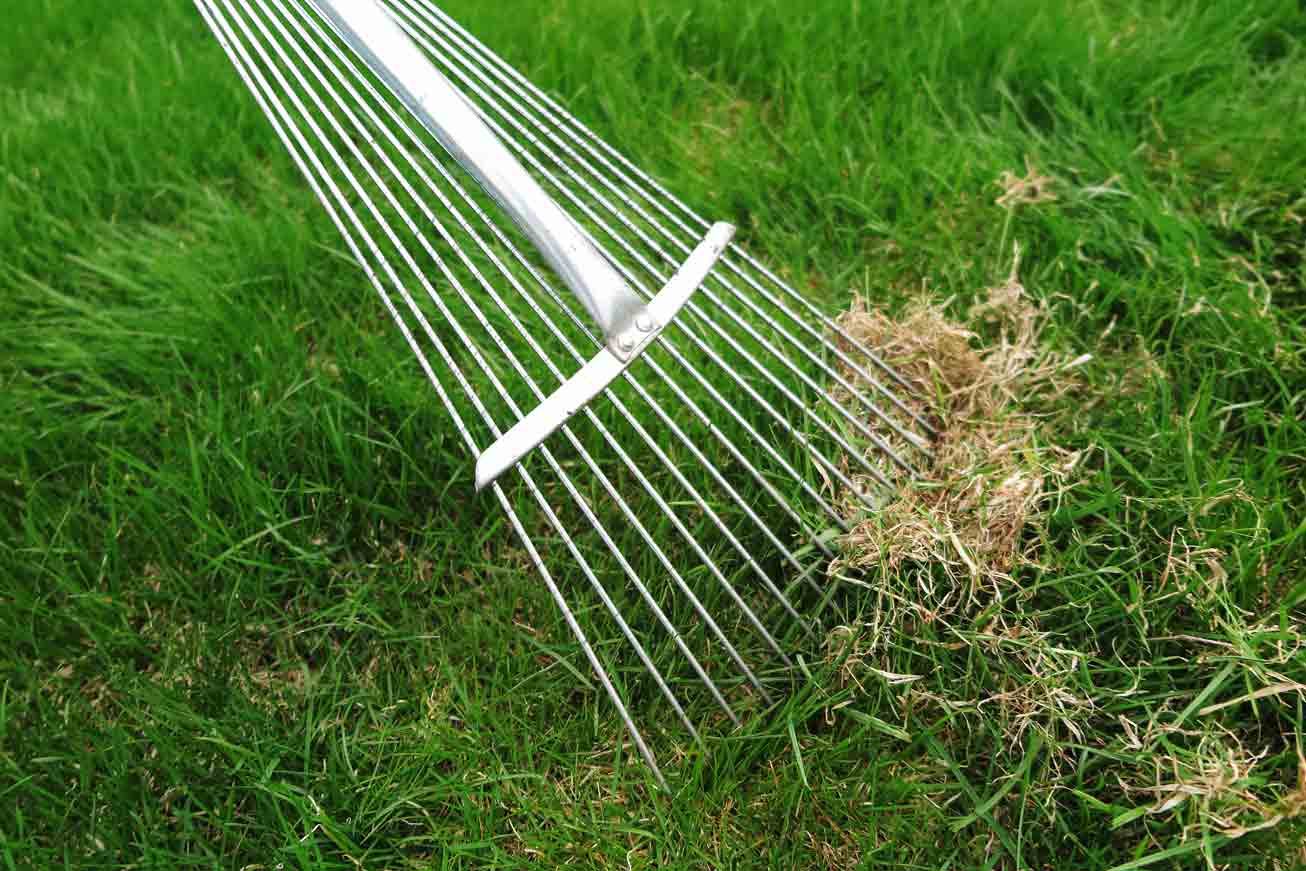
It’s easy to assume that the layer beneath your grass is mostly made up of clippings left behind after mowing. In reality, lawn clippings decompose quickly and rarely contribute to long-term buildup. What actually accumulates is a combination of plant material such as stems, roots, and other fibrous components that break down much more slowly.
This material forms a layer that sits between the soil surface and the actively growing grass. When kept in check, it can provide mild protection against temperature swings and help the lawn retain moisture. However, when decomposition slows and accumulation speeds up, that same layer can become overly dense and restrictive.
Not all lawns require immediate attention when it comes to buildup beneath the turf. The key factor is thickness. A light layer typically does not interfere with lawn health, but once it becomes too dense, it can begin to disrupt how your lawn functions.
Common issues that develop when this layer becomes excessive include:
Aeration is one of the most effective ways to improve soil conditions, especially in lawns that experience regular foot traffic or naturally compacted soil. Removing small cores from the ground allows aeration to create pathways that allow oxygen, moisture, and nutrients to reach deeper into the roots.
This process encourages roots to grow downward, resulting in a thicker, more resilient lawn. Aeration helps improve drought tolerance, nutrient absorption, and overall turf density. However, for these benefits to take hold, the soil must be accessible from the surface.
Both removing buildup and aerating your lawn can temporarily stress the turf, so timing plays a major role in how well your lawn recovers. These services should always be performed when your grass is actively growing and capable of repairing itself quickly.
If significant removal is needed, spacing the services out slightly can be beneficial. Giving your lawn a brief recovery window before aeration can help reduce overall stress and improve final results, especially if the turf is already thin or weakened.
When the layer beneath your grass becomes too thick, it can prevent aeration equipment from reaching the soil effectively. Instead of pulling clean plugs from the ground, the equipment may struggle to penetrate deeply enough to relieve compaction.
This can lead to several issues:
If your lawn feels unusually soft underfoot, drains poorly, or doesn’t respond well to watering and fertilization, it may be time to address the buildup before aerating. Removing that dense layer exposes the soil surface, allowing aeration equipment to work more effectively.
This approach creates a more complete improvement process: first eliminating the barrier, then correcting soil compaction. When done together in the right sequence, these services can significantly enhance lawn performance.
Not every lawn needs both services. If the layer beneath your grass is relatively thin, aeration on its own is often enough to improve soil conditions and promote healthy growth. In fact, routine aeration can help reduce future buildup by encouraging natural decomposition processes in the soil.
Proper mowing habits, balanced fertilization, and consistent watering also play a role in keeping buildup under control.
Different grass varieties grow in different ways, and some are more likely to develop dense layers beneath the surface. Grasses that spread aggressively through horizontal growth patterns tend to produce more organic material, which can accumulate faster if not managed properly.
Additionally, excessive watering or over-fertilizing can accelerate growth above the soil while slowing decomposition below it. Understanding how your specific grass type grows makes it easier to determine whether removing buildup before aeration is necessary.
Q: Can buildup beneath the grass cause uneven watering?
A: Yes, dense material can prevent water from penetrating evenly into the soil, leading to dry patches or inconsistent moisture levels.
Q: Is it possible to seed a lawn without clearing heavy buildup?
A: It’s difficult. Grass seed needs direct contact with soil to germinate properly, and thick layers can block that contact.
Q: Does compacted soil contribute to buildup issues?
A: It can. Compaction slows microbial activity, which reduces the breakdown of organic material and allows it to accumulate.
Q: What’s the difference between aggressive raking and full removal services?
A: Aggressive raking is a surface-level approach, while more intensive removal methods are designed to break up and extract deeper layers of buildup.
Q: Should you treat your lawn after removing buildup?
A: In many cases, yes. Light fertilization and proper watering can help the lawn recover more quickly after the process.
Q: Can over-fertilizing make buildup worse?
A: Yes, excessive nutrients can cause rapid growth, leading to more organic material accumulating faster than it can break down.

Touch up your lawn with Heartland Turf & Landscape